
Fewer listings don’t automatically mean it’s a perfect time to sell, or a bad time to buy. On the Island, inventory levels are shaped by lifestyle decisions, seasonality, and long-term ownership patterns, not short-term market cycles.
For buyers, low inventory often means fewer substitutes and longer planning horizons.
For sellers, it means strategy still matters, pricing, preparation, and timing don’t become optional.
Understanding what low inventory actually signals on Manitoulin Island helps you make a calmer, more confident decision, whether you’re buying, selling, or still planning.
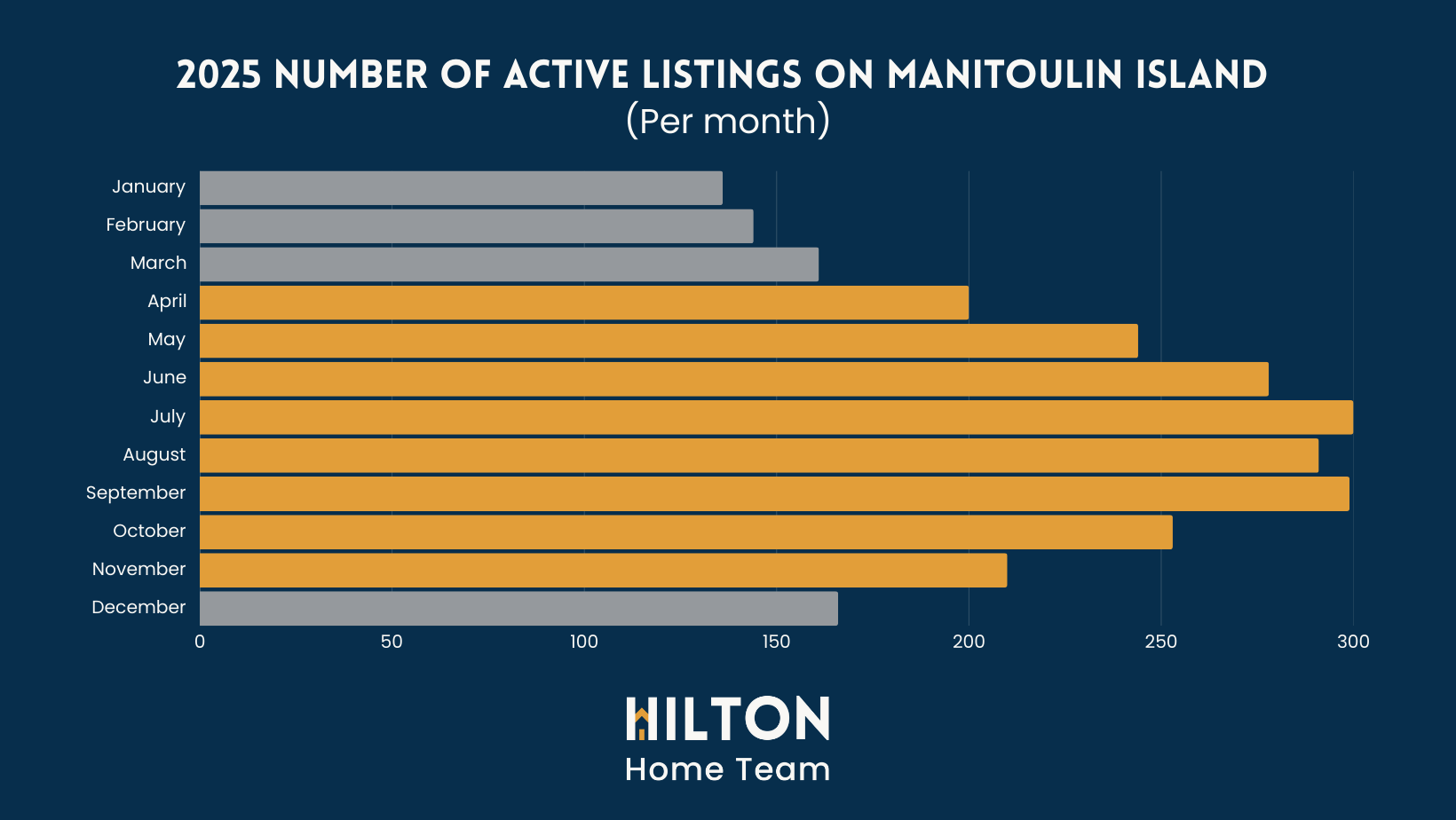 2025 Number of Active Listings on Manitoulin Island (Per Month)
Why Low Inventory on Manitoulin Island Is Different Than Sudbury or Mainland Markets
Low inventory is not unusual on Manitoulin Island, it’s structural.
Unlike urban or suburban markets where listings rise and fall quickly with interest rates or headlines, Manitoulin Island real estate is driven by lifestyle timing, not transaction timing. Many properties are held for decades, sometimes generations. Owners tend to sell when life circumstances change, not when the market “looks good.”
Key differences that shape Island inventory:
Lifestyle-driven demand (retirement, legacy planning, recreation)
Limited substitute properties (especially waterfront and acreage)
Long ownership cycles and stewardship mindset
Seasonal listing patterns, even though buying decisions happen year-round
This is why comparing Manitoulin Island inventory directly to Sudbury or Southern Ontario can lead to misleading conclusions.
Before we dive into what this means for your plans on Manitoulin Island, we invite you to check out our latest episode of How’s the Market: 2025 Manitoulin Island Wrapped. In this special recap, we break down last year’s key real estate metrics, from pricing trends to market activity, in a clear, easy-to-understand way. It’s the perfect snapshot of how the market performed in 2025 and a helpful foundation for understanding what’s shaping the year ahead...
What Low Inventory Means for Buyers on Manitoulin Island
For buyers, low inventory doesn’t mean you should rush, it means you should plan.
When listings are limited, buyers often need to adjust expectations rather than timelines. Fewer options doesn’t automatically mean fewer opportunities, but it does change how decisions unfold.
Common buyer realities in low-inventory Island conditions:
Fewer comparable homes at any given moment
Longer periods between “right-fit” listings
More importance placed on flexibility (location, condition, timing)
A need to think in terms of readiness, not constant availability
Many buyers assume that waiting will eventually bring more choice. On Manitoulin Island, inventory ebbs and flows, but it rarely floods. Buyers who succeed tend to be those who are clear on priorities and prepared to act when alignment appears, not when volume increases.
What Low Inventory Means for Sellers on Manitoulin Island
Low inventory can be helpful for sellers, but it’s not a shortcut.
A common misconception is that fewer listings mean any property will sell easily or that pricing and preparation matter less. On Manitoulin Island, buyers are intentional and selective, even when options are limited.
Low inventory does not automatically mean:
Any price will work
Buyers will overlook condition, access, or servicing
Timing is irrelevant
Presentation and positioning don’t matter
Island buyers often plan years ahead. They are patient, values-driven, and careful. Sellers who do best in low-inventory conditions are those who understand how their property fits into the lifestyle market, not just the numbers.
Is It a Good Time to Buy or Sell on Manitoulin Island?
This is the question most people are really asking, and the answer depends less on inventory and more on fit.
Low inventory can favour buyers when:
You’re flexible on timing or property features
You’re planning long-term Island living
You’re not relying on short-term appreciation
Low inventory can favour sellers when:
The property type is scarce (waterfront, well-located rural, village homes)
The home is well-prepared and realistically priced
The sale aligns with a broader life plan, not just market conditions
In some cases, low inventory creates stalemates, not leverage, buyers wait, sellers hesitate, and activity slows until clarity improves on both sides.
The Role of Seasonality in Low Inventory on Manitoulin Island
Seasonality affects visibility more than value on the Island.
Listings tend to cluster in certain parts of the year, but that doesn’t mean meaningful buying and selling only happen during those windows. Serious buyers watch the market consistently, and many sellers choose timing based on personal readiness rather than seasons.
Important distinctions to keep in mind:
Seasonal increases don’t always equal better choice
Quieter periods often attract more focused buyers
Inventory cycles repeat, but motivations differ year to year
Understanding seasonality helps set expectations, but it shouldn’t dictate decisions on its own.
What Matters More Than Inventory Levels on Manitoulin Island
Inventory headlines are broad. Good decisions are specific.
Factors that matter more than inventory counts:
Property type (waterfront, rural, village, recreational)
Access, zoning, and servicing details
Buyer intent (full-time living, retirement, recreational use)
Preparation and flexibility on both sides
Long-term lifestyle alignment
On Manitoulin Island, clarity consistently outperforms timing.
Low inventory on Manitoulin Island isn’t a signal to rush, or to wait indefinitely. It’s a reminder that this market rewards patience, preparation, and alignment.
Whether you’re buying or selling, the strongest outcomes come from understanding how Island dynamics differ from mainland assumptions, and planning around your life, not the headlines.
Want a quick strategy call for your situation? We’ll map out your best next step. Just Ask Hilton.